Ningbo Zhenhai Huake Sound CO.LTDAbout UsEngineers specializing in acoustics, analog and digitall electronics, and mechanics work hand in hand, collaborating with experienced live sound engineers, musicians and a musicologist who adapts the sound of every our factory product to suit human auditory physiology. They can document and analyze the audio properties and dynamics of a speaker system in exhaustive detail to ultimately advance the state of the art. Our day job is actually the pursuit of a vision—to reproduce acoustic events perfectly. They have more than 26 years in the pro audio industy.They were responsible for the project management for the design ,manufacturing and commissioning of PA speaker for JBL in 1999 in Soundking.And in

  1. Home
  2. Technology

Technology

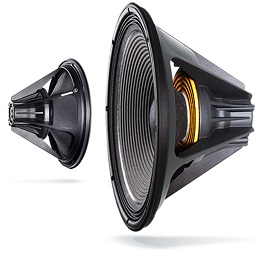
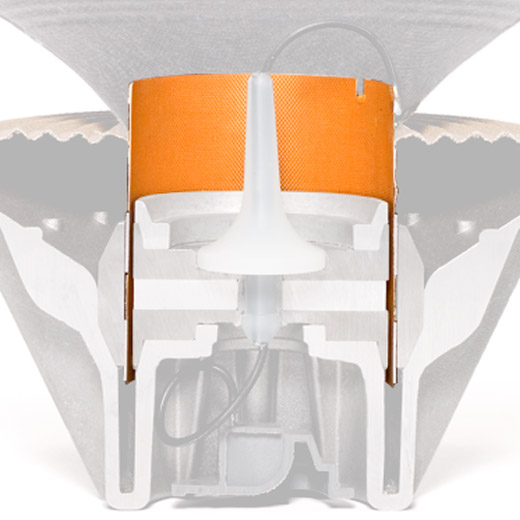
Transducers

Enhanced Performance & Dramatically Reduced Driver Weight

The technology of transducers is truly the starting place for the entire JBL engineering legacy.
Building on James B. Lansing's historic foundation, JBL engineers continue to break ground on new
and better ways to design transducers, reaching beyond what is commonly understood as possible
and consistently setting new performance benchmarks for the audio industry.Starting from scratch
and often developing patents in the process, JBL engineers always develop from the ground up,
resulting in technologies, such as Differential Drive woofers, CMCD Cone Midrange drivers, and the
D2 Dual Voice Coil Compression Driver, that cover the entire practical bandwidth of professional audio
devices. Simultaneously addressing performance-robbing challenges such as power compression,heat
dissipation, distortion, component weight, and physical footprint, JBL has created a range of transducers
that are unparalleled in their ability to deliver extraordinary performance throughout a wide range of applications.

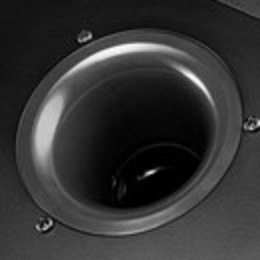
Directivity

Enhanced Performance & Dramatically Reduced Driver Weight

Building better loudspeakers is only the first of many performance challenges that face all audio design
engineers. Controlling the sound as it leaves the speaker enclosure is as critical to the performance of
the system as the quality of the source component. The goal is always the same: create a consistent
sound pattern throughout the desired vertical and horizontal plane without introducing artifacts, while
ensuring the full bandwidth and SPL capability of the transducers, and providing a seamless transition
from high frequency to low frequency components. JBL engineers relentlessly test new shapes and
develop new materials to achieve the desired performance, often inventing new testing methodologies
to ensure that nothing is left out of a thorough and rigorous examination of the design. The resulting
technology has produced such groundbreaking designs as the Progressive Transition Waveguide, Image
Control Waveguide, Slip Stream Port, Radiation Boundary Integrator, and Constant Curvature Waveguide.
With multiple patents, and many successful installations in use worldwide, this critical component of JBL
technology continues to evolve through our continuous pursuit of better, more accurate sound.

Material Innovations

Enhanced Performance & Dramatically Reduced Driver Weight

Building better loudspeakers is only the first of many performance challenges that face all audio
design engineers. Controlling the sound as it leaves the speaker enclosure is as critical to the
performance of the system as the quality of the source component. The goal is always the same:
create a consistent sound pattern throughout the desired vertical and horizontal plane without
introducing artifacts, while ensuring the full bandwidth and SPL capability of the transducers,
and providing a seamless transition from high frequency to low frequency components. JBL
engineers relentlessly test new shapes and develop new materials to achieve the desired
performance, often inventing new testing methodologies to ensure that nothing is left out of a
thorough and rigorous examination of the design. The resulting technology has produced such
groundbreaking designs as the Progressive Transition Waveguide, Image Control Waveguide,
Slip Stream Port, Radiation Boundary Integrator, and Constant Curvature Waveguide. With multiple
patents, and many successful installations in use worldwide, this critical component of JBL technology
continues to evolve through our continuous pursuit of better, more accurate sound.

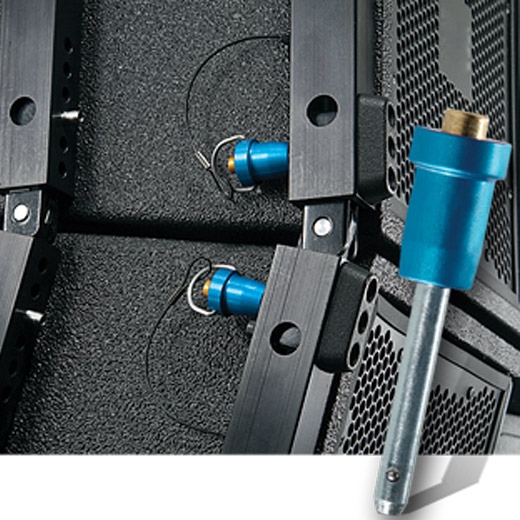
Rigging & Suspension

Enhanced Performance & Dramatically Reduced Driver Weight

Building better loudspeakers is only the first of many performance challenges
that face all audio design engineers. Controlling the sound as it leaves the
speaker enclosure is as critical to the performance of the system as the quality
of the source component. The goal is always the same: create a consistent sound
pattern throughout the desired vertical and horizontal plane without introducing
artifacts, while ensuring the full bandwidth and SPL capability of the transducers,
and providing a seamless transition from high frequency to low frequency components.
JBL engineers relentlessly test new shapes and develop new materials to achieve
the desired performance, often inventing new testing methodologies to ensure
that nothing is left out of a thorough and rigorous examination of the design. The
resulting technology has produced such groundbreaking designs as the Progressive
Transition Waveguide, Image Control Waveguide, Slip Stream Port, Radiation
Boundary Integrator, and Constant Curvature Waveguide. With multiple patents,
and many successful installations in use worldwide, this critical component of
JBL technology continues to evolve through our continuous pursuit of better, more accurate sound.

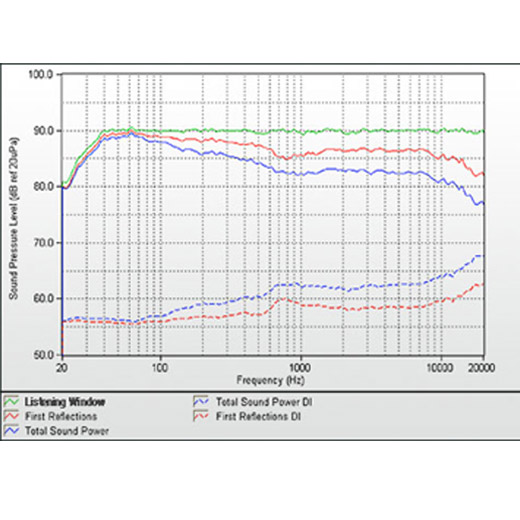
Testing

Enhanced Performance & Dramatically Reduced Driver Weight

Building better loudspeakers is only the first of many performance challenges
that face all audio design engineers. Controlling the sound as it leaves the
speaker enclosure is as critical to the performance of the system as the quality
of the source component. The goal is always the same: create a consistent
sound pattern throughout the desired vertical and horizontal plane without
introducing artifacts, while ensuring the full bandwidth and SPL capability of
the transducers, and providing a seamless transition from high frequency to
low frequency components. JBL engineers relentlessly test new shapes and
develop new materials to achieve the desired performance, often inventing
new testing methodologies to ensure that nothing is left out of a thorough
and rigorous examination of the design.The resulting technology has produced
such groundbreaking designs as the Progressive Transition Waveguide, Image
Control Waveguide, Slip Stream Port, Radiation Boundary Integrator, and
Constant Curvature Waveguide. With multiple patents, and many successful
installations in use worldwide, this critical component of JBL technology
continues to evolve through our continuous pursuit of better, more accurate sound.
Sorry! No related records found.
customer-service Customer Service
message Message
go top Top
qrcode

Send Message

*
*
* clear input
*
* clear input
* clear input
* clear input
* clear input
Choose language